Why the Cheapest Safety Gate May Be An Expensive Decision
When safety managers sit down to evaluate safety gate options, the conversation usually starts in the same place: price. And that makes sense — budgets are real, and every dollar has to be justified. But purchase price and total cost are two very different numbers, and in the world of safety equipment, confusing the two can quietly drain your maintenance budget for years.
The real question isn’t what a safety gate costs on day one. It’s what it costs over its entire life in your facility.
The Hidden Cost of Maintenance
Safety gates live hard lives. In a busy warehouse or distribution center, a gate might be cycled dozens of times a day — opened and closed by workers, nudged by lift trucks, bumped by AGVs, and exposed to the general wear and tear of industrial life. Gates built around hinges and thin mechanical components feel that stress every single cycle. Hinges fatigue. Moving parts wear. And before long, a gate that looked like a bargain at purchase is generating a steady stream of parts orders, maintenance calls, and — most critically — downtime.
Research shows that purchase price overlooks operating, maintenance, and downtime costs, which can dominate the lifecycle of a piece of equipment. Higher upfront options are often more cost-effective over time due to lower failure rates and longer service life. That principle applies squarely to safety gates.
Every time a safety gate is out of service for repair, it’s not just an inconvenience — it’s a compliance gap. A gate that isn’t functioning is a platform that isn’t protected.
Built Different, From the Ground Up
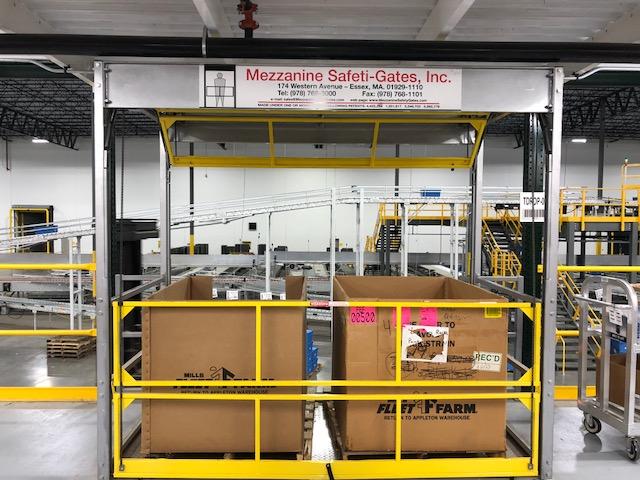
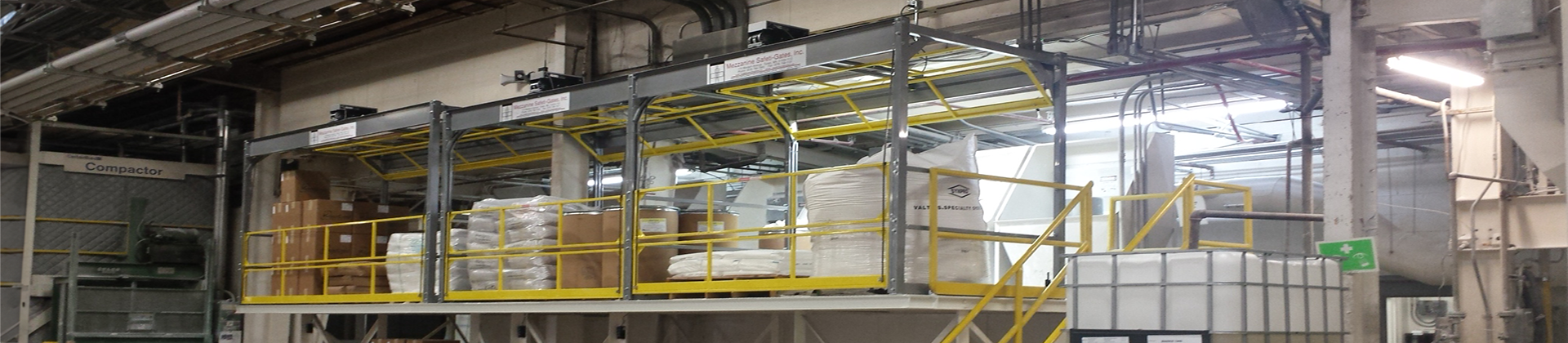
Mezzanine Safeti-Gates’ systems are engineered to avoid this cycle entirely. Our gates are constructed from tubular steel — not lightweight materials that fatigue over time. They can be secured directly into the flooring or attached to existing rack system uprights, giving you a rock-solid installation that holds up to the demands of industrial environments.
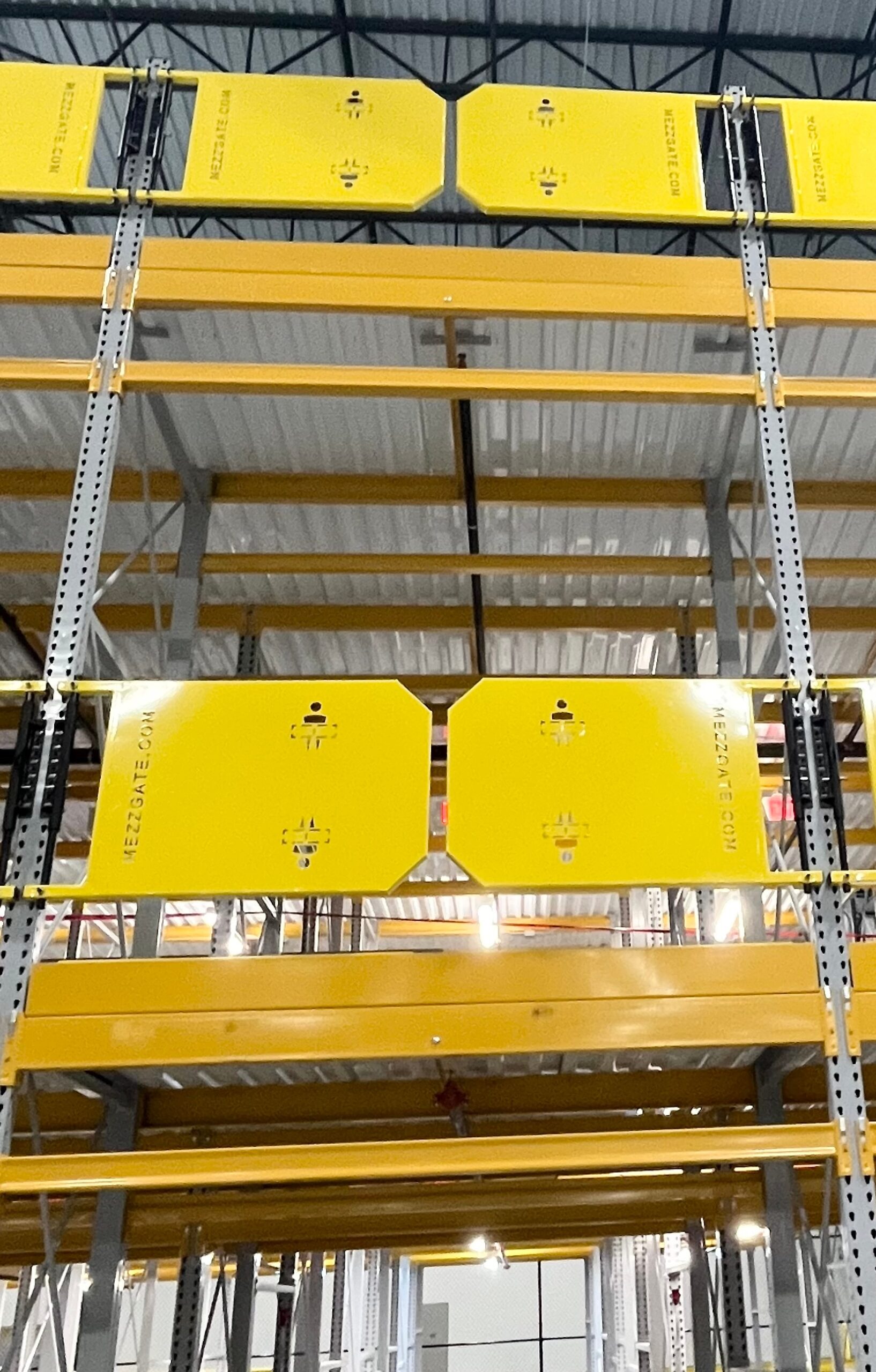
Our pallet flow safety gate takes durability even further. It’s hingeless by design, eliminating the single component most likely to fail in a traditional pallet flow lane gate. There’s nothing to catch, nothing to fatigue, and nothing to replace.
The result isn’t just a more rugged gate. It’s a gate that simply keeps working, year after year, without asking anything of your maintenance team.
Ten Years. Twenty Years. No Maintenance.
We don’t have to speculate about how our gates hold up — we can look in the field. The majority of our safety gate models that have been installed are still in use today with no maintenance required. Many have been in service for over ten years. Some have reached twenty.
That kind of track record changes the math entirely. When you spread the purchase price of a MezzGate system across ten or twenty years of maintenance-free service, the cost per year is remarkably low. Compare that to a gate that requires regular parts replacement, service calls, or full unit replacement after a few years of hard use, and the “cheaper” option starts to look very expensive.
What to Ask Before You Buy
If you’re evaluating safety gate options for your facility, here are a few questions worth asking any supplier:
- What is the expected service life of this gate under regular industrial use?
- Does this gate have hinges or other mechanical components that will require periodic replacement?
- What does the maintenance schedule look like, and who is responsible for it?
- Can you point me to installations that have been in service for ten or more years?
The answers will tell you a lot about what you’re really buying.
The Bottom Line
At Mezzanine Safeti-Gates, we build our gates so that once they’re installed, your team can focus on running your facility instead of maintaining your equipment. Solid steel construction, hingeless designs, and a track record measured in decades make the choice straightforward for safety managers who are thinking about true total cost of ownership. The cheapest gate on day one is rarely the cheapest gate over time.